
MoMATH + WOLFRAM

Funding for this project generously provided by Overdeck Family Foundation

π
Σ

PHILOSOPHY OFMATHEMATICSPROJECT

A virtual interactive exhibit being developed for the National Museum of Mathematics in New York City

INTERACTIVE EXHIBITS

Mathematical Platonism

Platonism holds that mathematical objects, numbers, sets, and shapes, exist independently of human minds, in an abstract realm beyond space and time. On this view, mathematicians discover truths rather than invent them, much as astronomers discover planets. It explains why mathematics feels objective and universal, but raises a hard question: how can we know about objects we can never see or touch?
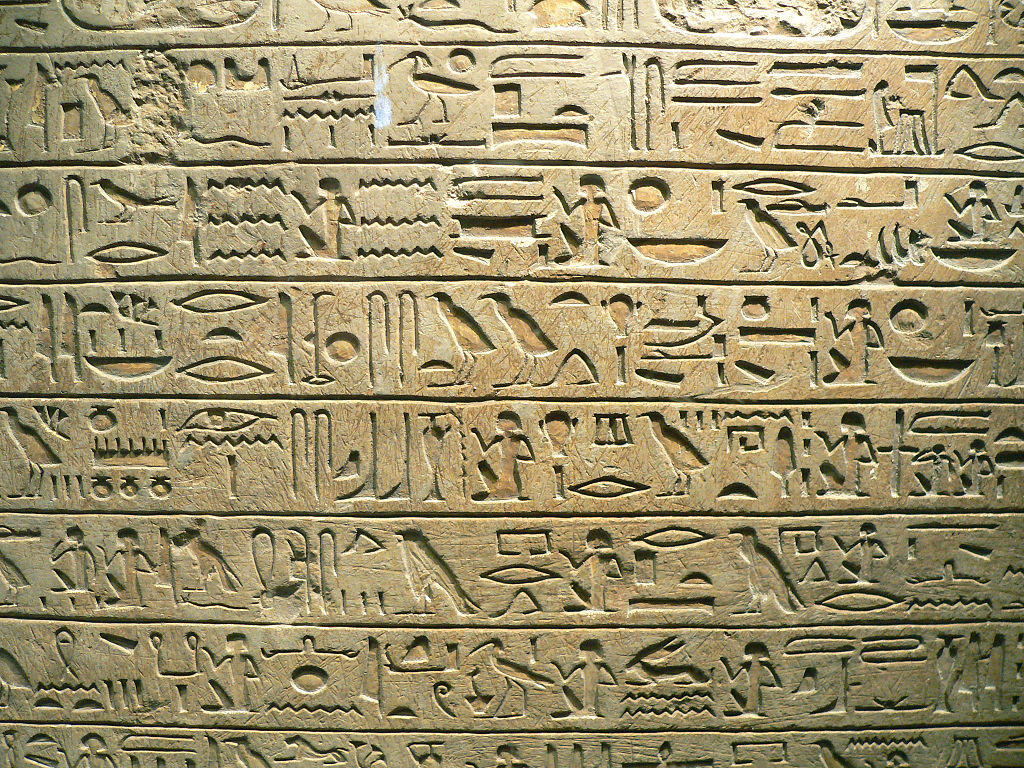
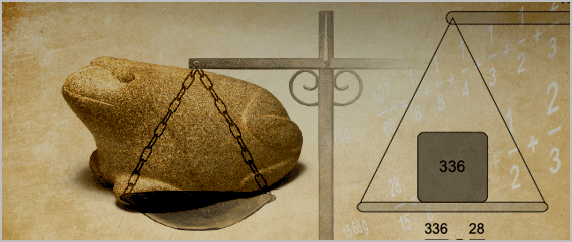
Ancient hieroglyphic scripture

Formalism

Formalism treats mathematics as a game played with symbols according to fixed rules, where the marks on the page need not refer to anything real. A theorem is simply a string derivable from axioms by permitted moves, and 'truth' means provability within a system. Championed by David Hilbert, formalism sought to ground all of mathematics on secure, finite foundations—an ambition later complicated by Gödel's discoveries.

Ancient hieroglyphic scripture

Intuitionism

Founded by L.E.J. Brouwer, intuitionism views mathematics as a creation of the human mind, built from our intuition of time and succession rather than discovered in an external realm. It rejects the law of excluded middle for infinite collections, insisting that a statement is true only when we can actually construct a proof of it. This makes some classical theorems unprovable, but yields a mathematics in which existence always means constructability.

Ancient hieroglyphic scripture

Logicism

Logicism, advanced by Frege, Russell, and Whitehead, claims that mathematics is ultimately a branch of logic—that arithmetic and beyond can be derived from purely logical axioms and definitions. If successful, it would show mathematical truth to be as certain as logic itself. Russell's discovery of a paradox in the foundations forced major revisions, and the program's full ambitions were never quite realized.

Ancient hieroglyphic scripture

Predicativism

Predicativism restricts which mathematical objects may be defined, forbidding definitions that refer to a totality already containing the object being defined—a circularity known as impredicativity. Inspired by Poincaré and Russell, it aims to avoid the paradoxes that arise from such self-reference. The result is a more cautious mathematics that builds objects in stages, accepting less than classical theory but gaining tighter logical control.

Ancient hieroglyphic scripture

Geometry

Geometry focuses on the properties of space and the size and shape of objects. Its investigation dates back to the earliest recorded civilizations.

Ancient hieroglyphic scripture

Gödel & the Limits of Certainty

In 1931, Kurt Gödel proved that any consistent formal system rich enough to express arithmetic contains true statements it cannot prove, and cannot demonstrate its own consistency. These incompleteness theorems shattered Hilbert's dream of a complete, self-justifying foundation for mathematics. They reveal a permanent gap between truth and provability, reshaping how we understand the limits of formal reasoning.

Ancient hieroglyphic scripture

Benacerraf's Epistemological Problem

Paul Benacerraf posed a dilemma: our best account of mathematical truth treats numbers as abstract objects, yet our best account of knowledge requires causal contact with what we know. Since abstract objects cannot cause anything, it becomes mysterious how we could ever know mathematical facts at all. This tension remains a central challenge for any philosophy that takes mathematical objects to be real.

Ancient hieroglyphic scripture

Foundations and Set Theory

The search for foundations asks what mathematics ultimately rests upon, and since the early twentieth century set theory has been the leading candidate. Using axioms such as those of Zermelo–Fraenkel, nearly every mathematical object can be modeled as a set, unifying the discipline under one framework. Yet questions like the Continuum Hypothesis, shown to be independent of the standard axioms, reveal that even our deepest foundations leave fundamental matters undecided.

Ancient hieroglyphic scripture